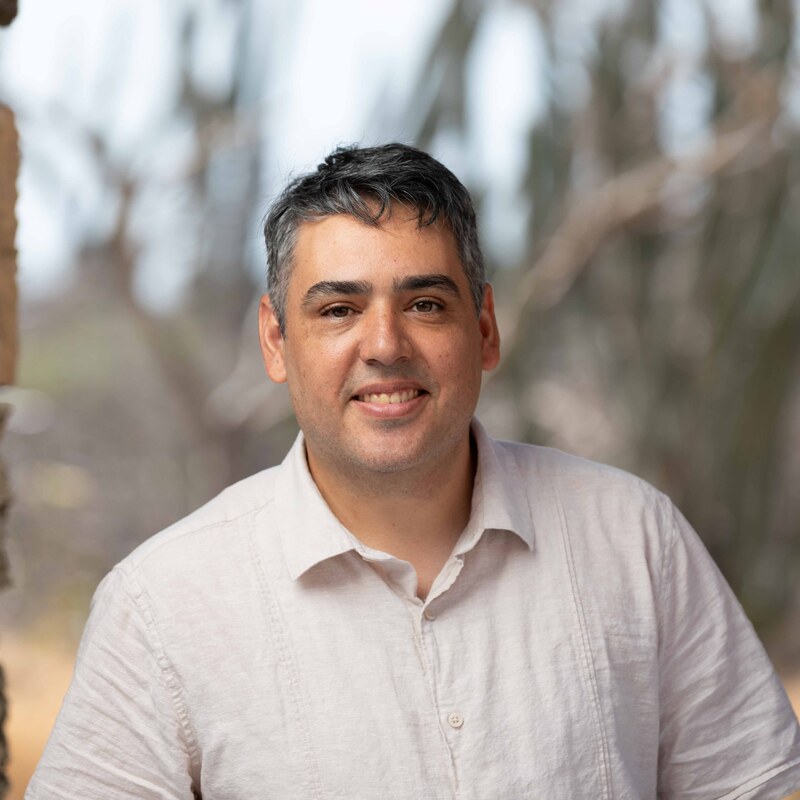
I am an economist working on the resilience and adaptive capacity of small island economies. Islands suit the question because everything happens fast enough to watch. A shock reaches employment and the public accounts within months. A policy choice shows its second-order effects inside one electoral term. In a large economy the same mechanisms run over decades and get buried under everything else moving at once.
My doctoral work at Vrije Universiteit Amsterdam runs on two literatures. Complex adaptive systems theory describes an economy that reorganises around a shock instead of returning to where it started. Dynamic capabilities theory asks what a government or a firm has to be able to do for that reorganisation to happen at all. The empirical work covers the six territories of the Dutch Caribbean and the wider group of small island developing states.
Before this I spent eight years at the Centrale Bank van Aruba, latterly as medior economist and secretary of the Monetary Policy Committee, and worked as a consultant to the World Bank on disaster risk financing and post-disaster needs assessments across the Caribbean. I administer the Dutch Caribbean Digital Competence Network, an NWO-funded research-infrastructure network spanning all six islands, and I am a partner in Cornerstone Economics, an independent economics practice in Oranjestad.
I also write for a general audience. The Conch Paradox, published in March 2026, argues that the strengths which made Caribbean economies successful are the same properties that now make them fragile.